

Andrey Pozharskiy/Shutterstock.com
CE, you might have seen these two letters (short for the French "conformité européenne") on everyday items like LED bulbs, children's toys, or even your smartphone.
Introduced in 1993, the CE marking system became mandatory for various product categories within the European Economic Area (EEA). Although the system has evolved, its core purpose has remained unchanged.
Today, the CE mark appears on countless products traded within the EEA. It indicates that a product has been assessed by the manufacturer and meets EU safety, health, and environmental protection standards.
CE mark: what do businesses and consumers gain from it?
The CE marking indicates that the manufacturer has assessed the product’s conformity with applicable EU requirements and has met the relevant obligations before placing it on the market.
The CE marking offers significant benefits to both businesses and consumers. For businesses, products with the CE marking can be traded within the EEA without facing additional trade barriers or restrictions.
This means companies do not need to adapt their products to different national regulations in each EU member state, saving time and resources compared to obtaining separate approvals for each country.
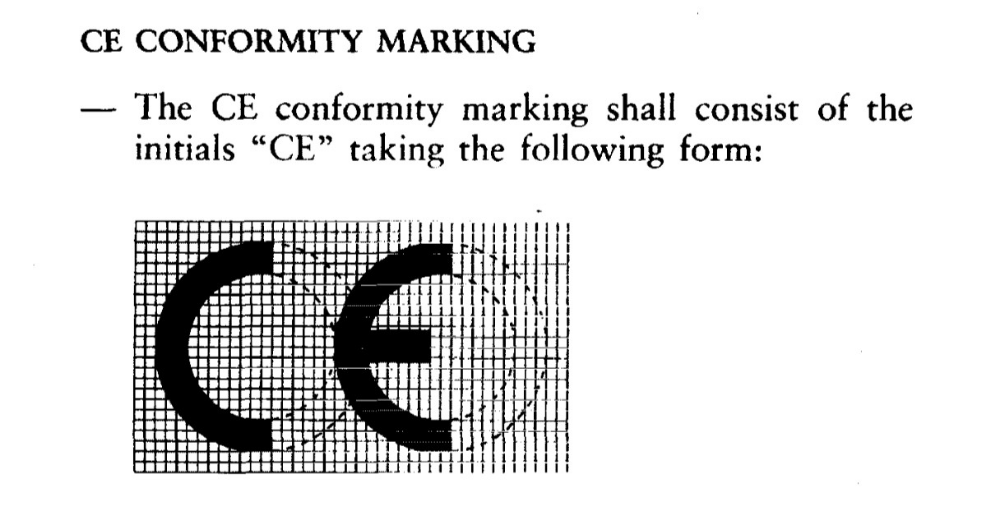
Source: Council directive 93/68/EEC
Consumers benefit from consistent health, safety, and environmental protection across the market. For example, toys bearing the CE marking must comply with EU toy safety requirements. Similarly, personal watercraft bearing the CE marking must meet applicable safety and environmental requirements before they can be made available on the EEA market.
How are standards related to CE marking?
Standards play an important role in supporting CE marking. While CE marking demonstrates that a manufacturer has assessed a product and confirmed its compliance with applicable EU requirements, European standards provide practical technical solutions that manufacturers can use to meet those requirements.
In many product areas, manufacturers can use harmonised European standards to demonstrate that their products comply with relevant EU legislation.
When is CE marking mandatory?
CE marking is mandatory for products manufactured anywhere in the world that are marketed within the EEA. It ensures fair competition by holding all companies to the same standards.
However, CE marking is not required for all products. It is only obligatory for those covered by EU specifications. If the marking cannot be placed directly on the product, it can be included on the packaging or in the accompanying documents. And some products must comply with several EU requirements at the same time.
Find contact information for CE marking in your country here🡭.