
How standards ensure safety of world's plugs and sockets
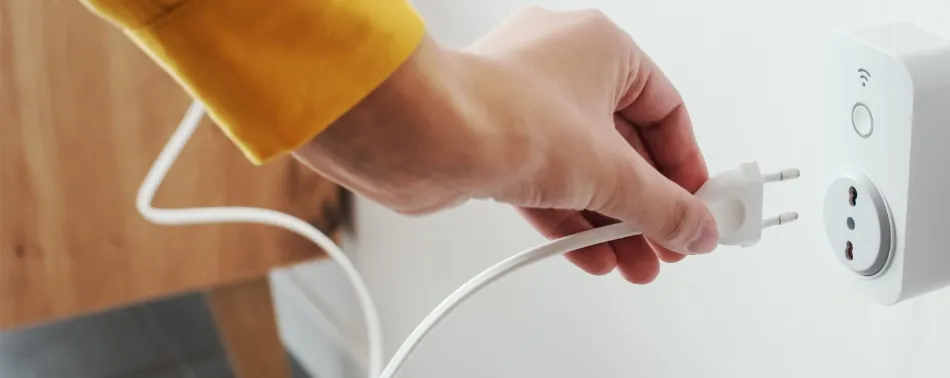
Stock-Asso/Shutterstock.com
Few things are more frustrating than arriving in a new country only to discover your device’s plug doesn’t fit the local socket. With over a dozen plug types in use globally, the question often arises: “Why isn’t there a single plug that works everywhere”?
The answer lies in history. When electricity was first introduced to homes in the late 19th century, it was primarily used for lighting.
As appliances became more common in the early 20th century, countries developed their own plug and socket systems to meet local needs. At the time, international travel was rare and compatibility wasn’t a priority.
Efforts to standardise began early but were interrupted by global events such as World War II. By the time discussions resumed in the 1950s, most countries had already built extensive infrastructure around their national systems. Changing course would have meant replacing billions of sockets and appliances, a cost few governments could justify.
Yet despite the variety of plug shapes, one thing remains consistent: safety. Whether you’re plugging in a laptop in London or a hairdryer in Johannesburg, the underlying principles — voltage specifications, insulation requirements and testing protocols — are guided by international standards.
IEC 60906-1, a harmonised plug and socket system designed for international adoption, demonstrates the commitment to global interoperability.
While only a few countries, such as South Africa and Paraguay, have adopted standards based on IEC 60906-1, the standard remains a benchmark for safety and practicality.
It's important to emphasize that the existence of multiple plug types is not a failure of international standardisation. It reflects the economic reality of the installed base.
National systems, though varied in design, offer excellent safety and performance. Adoption of international solutions is a collaborative decision made by member countries based on feasibility and cost.
While the plug on the wall may differ, the safety behind it does not. So next time you reach for a travel adaptor remember that while the shape may vary, the safety does not. That is the power of international standards.
More on standards and plugs: https://www.iec.ch/world-plugs🡭