
When cars call for help
stockwerk-fotodesign/Shutterstock.com
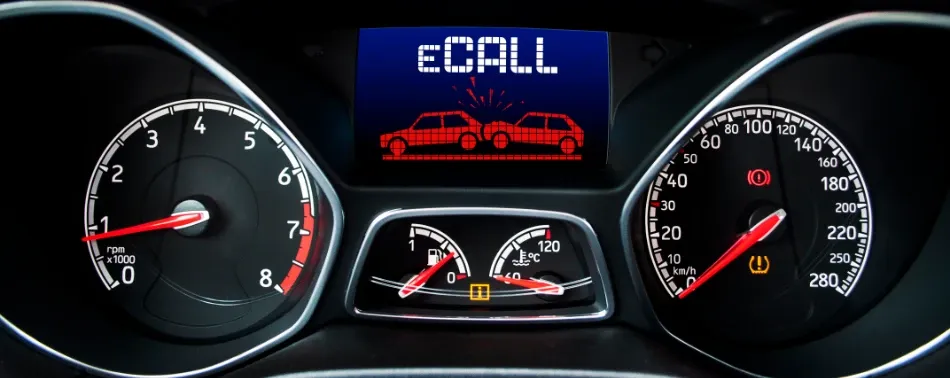
Every year, thousands of lives are lost on European roads due to serious car crashes. While emergency services do their best, precious time can be lost when accidents occur in remote locations or drivers are too injured to call for help. What if your car could call emergency services for you? This is exactly what the Pan-European eCall system does – and a newly updated standard ensures it works even better.
EVS-EN 16072:2025 Intelligent transport systems - ESafety - Pan-European eCall operating requirements sets out the operational requirements for eCall: an automatic in-vehicle emergency call system that connects directly with emergency responders.
What is eCall?
eCall is an intelligent transport system that automatically contacts the nearest Public Safety Answering Point (PSAP) if a serious road accident occurs. It transmits a voice connection and a Minimum Set of Data (MSD), such as the exact location, vehicle type, and direction of travel, to help first responders act quickly and efficiently.
The system can be triggered automatically when airbags deploy or manually by pressing an SOS button inside the vehicle.
Why does standardisation matter?
To make eCall truly pan-European, vehicles and emergency call centres across all EU Member States must speak the same technical language. That is where EVS-EN 16072:2025 comes in. This standard ensures that:
- Every car with eCall can connect with emergency centres regardless of the country.
- The data sent is consistent and reliable.
- Drivers’ privacy and security are protected.
- Voice and data communication work seamlessly, even in cross-border situations.
What’s new in the 2025 edition?
This updated version replaces the 2022 edition and brings several improvements:
- Enhanced clarity on how location and direction data are handled.
- Better instructions for PSAP operators on how to respond, especially when voice connection is not possible.
- Stronger privacy measures to ensure eCall only activates in genuine emergencies.
- It also adds new technical details to ensure compatibility with both older mobile networks (like GSM) and newer systems using the internet (IP-based communication).
Benefits for People and Society
The eCall system is not just a technical feature – it saves lives. According to EU estimates, fully deploying eCall across Europe could save up to 2,500 lives every year and significantly reduce the severity of road traffic injuries.
Moreover, sending accurate location data helps emergency teams reach the scene faster, even in hard-to-find places like rural roads or foreign countries. And because eCall respects data protection laws, drivers can trust that their car is not tracking them – it only activates in emergencies.
This standard shows how thoughtful engineering and cooperation can make technology work for everyone’s benefit. By turning vehicles into emergency responders themselves, eCall bridges the gap between a crash and life-saving care.
Source: CEN and CENELEC.