
The rise of immersive technologies in education and training
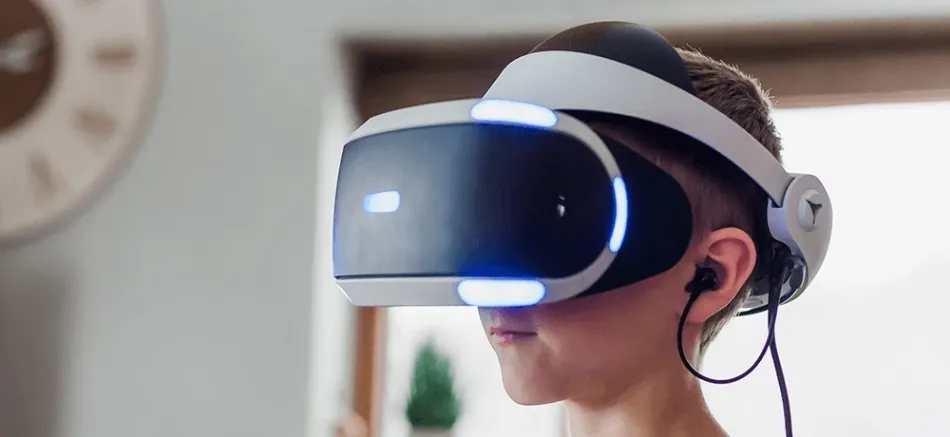
One of the biggest tech trends is the continuing evolution of virtual, augmented or mixed reality (VR/AR/MR) technology, with smart glasses tipped to go mainstream.
But beyond the benefits when it comes to entertainment and gaming, these immersive technologies are also revolutionising the education sector, enabling simulated and immersive experiences that mimic real-life action, without the costs or risks.
From training employees on how to react in an emergency to undergoing complex surgery, immersive learning technologies are proving to be a highly effective way of teaching.
VR is a simulated three-dimensional environment that allows the user to explore and interact with a virtual surrounding in a realistic way. AR is generally experienced using a smartphone or camera that captures the users’ surroundings and adds digital elements.
Using AR, VR and MR to create simulated environments enables learners to acquire and practice skills and tasks, helping them develop competencies and build confidence in a way that only true-life experience can. Being interactive, engagement rates are often superior to traditional training and users can interact with others different locations, potentially reducing costs compared to training that is face to face.
To support the development of immersive technologies, a new international standard has just been published. ISO/IEC 9234 provides requirements and recommendations for developing education and training systems using VR, AR and MR. It specifies how to organise the information and data necessary for developing integrated systems.
What’s more, it defines an information modelling architecture, which can be used to make the information shareable and interchangeable between systems.
More standards can be found from our e-shop.
Source: IEC.